
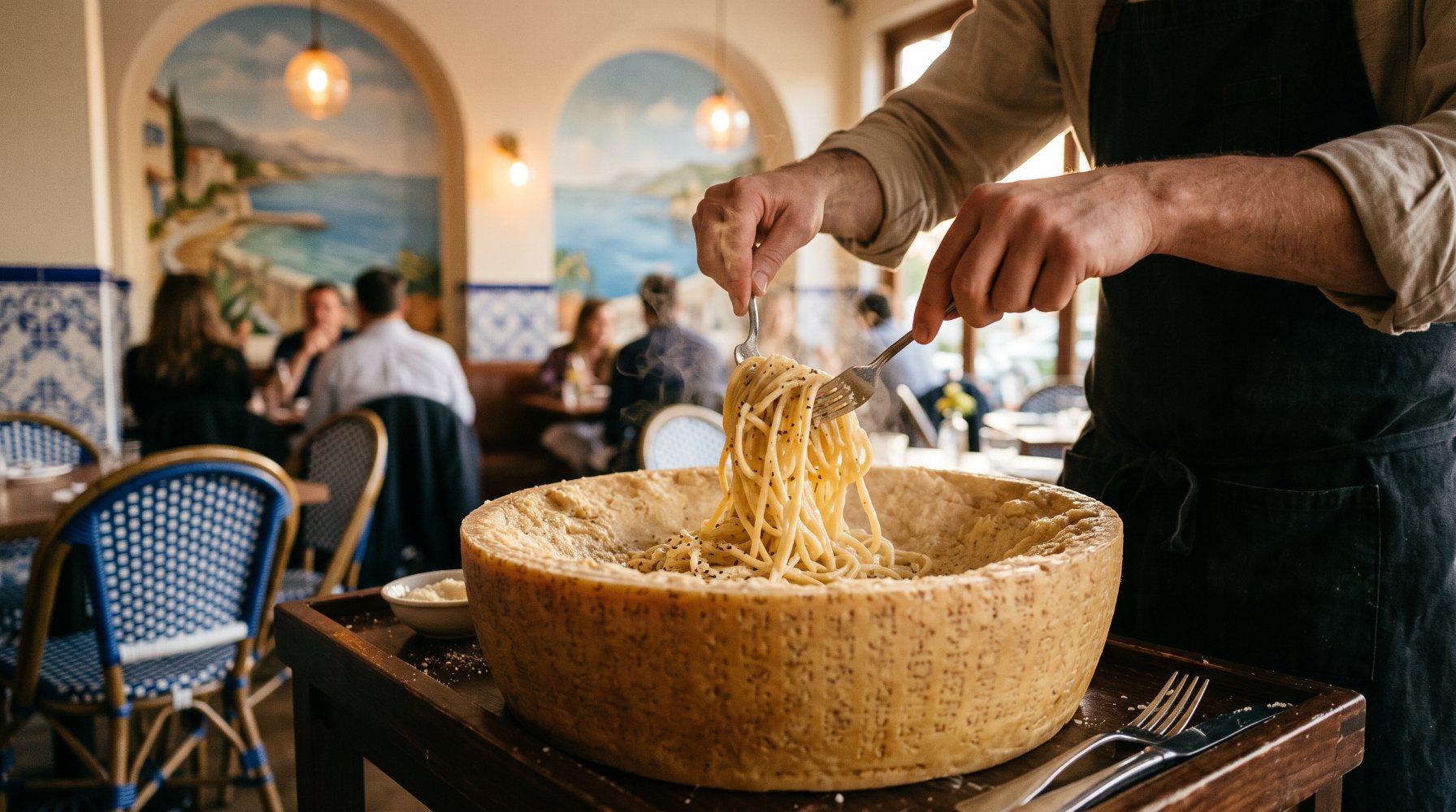
Cheese wheel pasta is fresh pasta finished inside a hollowed-out wheel of aged Italian cheese, so the heat of the noodles melts the inside of the wheel into the sauce. If you want cheese wheel pasta in San Diego, Amuri Italian Cuisine makes it every night at 9932 Mercy Road, in the Canyon Hills Shopping Center on the Mira Mesa and Rancho Peñasquitos line. The pasta is made in house, the wheel comes to your table, and the whole thing takes about two minutes.
What Cheese Wheel Pasta Actually Is
Strip away the theater and it is a very old Italian idea. Hot pasta plus a hard, aged cheese plus a splash of starchy cooking water equals a sauce. The wheel just puts more cheese in contact with the pasta than a grater ever could.
The cook scrapes the inside of the wheel as the pasta turns, so every strand picks up fresh cheese that has never been pre-grated or sitting in a bowl. That is the whole difference. Pre-grated cheese dries out and clumps. Cheese pulled straight from the wheel melts into a glossy coating that clings.
The Wheel: Parmigiano Reggiano or Pecorino Romano
Two cheeses do most of the cheese wheel work in Italian kitchens, and they are not interchangeable. Parmigiano Reggiano is a cow’s milk cheese. According to the Parmigiano Reggiano Consortium, each wheel averages about 40.5 kilograms, takes roughly 520 liters of milk, and ages at least 12 months before it can carry the name.
Pecorino Romano is made from sheep’s milk and tastes saltier and sharper. The Pecorino Romano Consortium puts its wheels at 20 to 35 kilograms, with at least five months of aging for table cheese and eight for grating cheese. Pecorino is the cheese of Roman pasta, the base of cacio e pepe and carbonara. Parmigiano is rounder and nuttier. Ask your server which wheel is on the cart that night.
How It Is Made, Start to Finish
Here is what happens between the kitchen and your plate:
- The pasta is cooked just short of done, so it finishes in the wheel instead of going soft.
- A little of the hot, starchy cooking water comes with it. That starch is what turns melted cheese into sauce instead of a clump.
- The cook drops the pasta into the hollow of the wheel and turns it with two utensils, scraping the walls as it goes.
- Black pepper or the chef’s finishing touch goes on, and the pasta is plated right there.
The noodles have to be hot enough to soften the cheese and wet enough to emulsify it. Get either wrong and you get a greasy, stringy plate. Get both right and the sauce looks almost creamy, even though there is no cream in it.
Why Handmade Pasta Makes the Difference
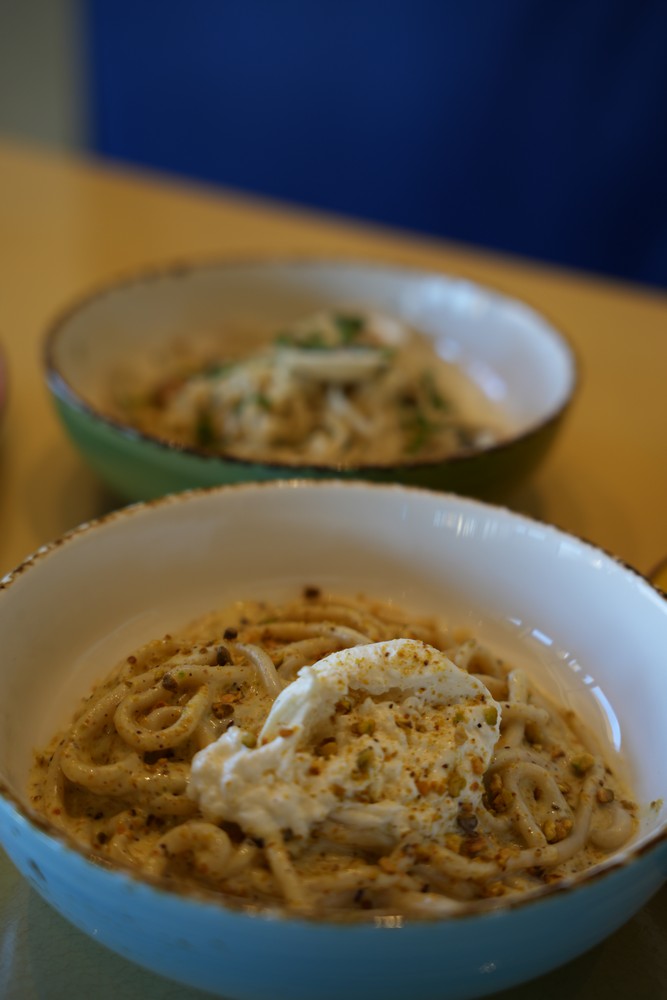
A cheese wheel cannot rescue bad pasta. Dried, smooth supermarket spaghetti lets the cheese slide off. Fresh, handmade pasta has a rougher surface and more give, so the sauce grips it.
At Amuri, pasta, sauces, breads and desserts are made in house. You can taste the same logic in our tonnarelli cacio e pepe and the pistachio pesto pistacchiosa on the dinner menu: square-edged strands that hold pecorino and pepper the way a round noodle never does. The family behind the kitchen comes from Bagheria, outside Palermo, and you can read how they built the room by hand on our story page.
Where to Get Cheese Wheel Pasta in San Diego
Most of the cheese wheel pasta in San Diego is served in Little Italy or the beach neighborhoods, which means a 25-minute drive and a parking garage for anyone living in North Inland. Amuri is off I-15 at Mercy Road. That is about ten minutes from Scripps Ranch, Poway and Carmel Mountain Ranch, and closer still from Rancho Peñasquitos and Sabre Springs. The lot is free and right out front.
The dish is listed on the dinner menu as the chef’s pasta tossed in a cheese wheel, so the shape can change with what the kitchen is making that day. Weeknights are easy. Friday and Saturday fill up, so reserve a table before you come.
What to Order Around It
The cheese wheel is rich, so build the meal with something bright on either side. Start with the carciofi alla romana or a caprese with burrata, then let the pasta be the main event. If you are new to the menu, our guide on what to order at a Sicilian restaurant walks through the arancine, the cioppino and the cannoli.
For wine, go crisp. A Grillo from Sicily or a Verdicchio cuts through aged cheese without fighting it, and both are on the drinks menu. Curious why a Sicilian kitchen cooks Roman pasta at all? Our piece on Sicilian food vs Italian food covers where the lines blur.
Cheese Wheel Pasta for Groups and Celebrations
A pasta tossed in a cheese wheel at the table gets phones out at a birthday faster than a candle does. For a party of eight or more, we can build it into a fixed menu so the whole table gets the show at once. Start on the private events page, and if you are booking for the office this December, our holiday party menus lay out lunch and dinner options.
Frequently Asked Questions
Is cheese wheel pasta just a gimmick?
It is a show, but the technique is real, and it is why cheese wheel pasta in San Diego has caught on. Cheese scraped fresh from the wheel melts more evenly than pre-grated cheese, and starchy pasta water turns it into sauce. With handmade pasta, it is one of the best plates on the menu.
How much does cheese wheel pasta cost at Amuri?
The price depends on the pasta the chef is running that night. Ask your server when you sit down, or call (858) 397-2199 before you come in.
Is cheese wheel pasta vegetarian?
There is no meat in the dish itself. Traditional Parmigiano Reggiano and Pecorino Romano are made with animal rennet, though, so strict vegetarians should ask us first.
Do I need a reservation?
Walk-ins are welcome when a table is open. For Friday or Saturday dinner, or a group of six or more, book ahead.
Ready to Get Started?
The cheese wheel is waiting off Mercy Road, ten minutes from most of North Inland San Diego. Book a table and tell your server you came for the wheel.
Reserve a Table or call us at (858) 397-2199.