
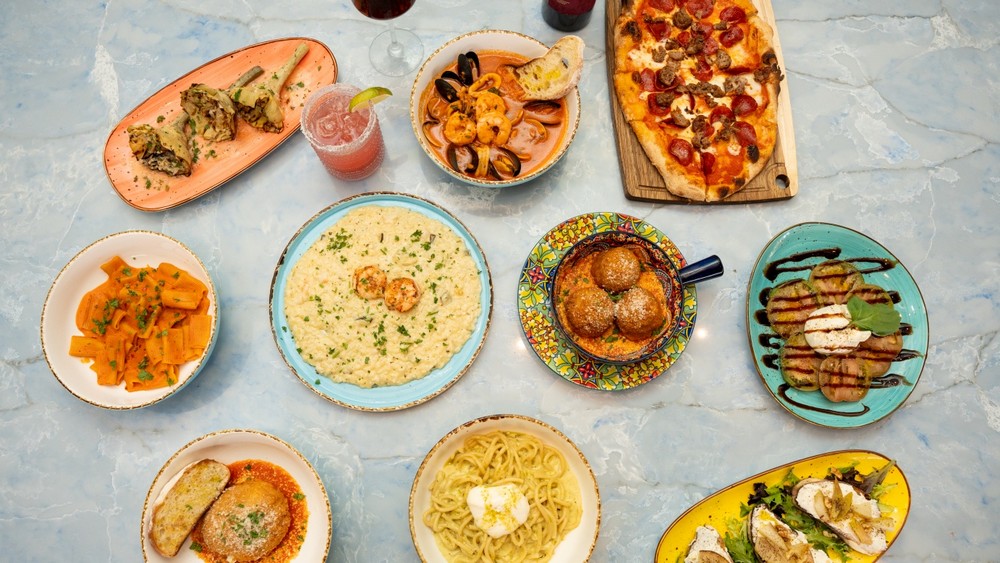
Sicilian food vs Italian food is not a marketing distinction. Sicily sat under Arab rule for roughly two and a half centuries, then Norman rule after that, and the kitchen absorbed both. What you get is citrus in savory dishes, pistachio and almond where the mainland uses butter and cream, saffron in rice, and seafood in place of beef. Amuri Italian Cuisine is a Sicilian restaurant in Rancho Peñasquitos run by a family from Bagheria, outside Palermo, and this is the shortest honest explanation of what makes the food different.
Sicily Was Governed by Everyone
Greeks, Romans, Byzantines, Arabs, Normans, Spanish. Each one left something in the pantry. UNESCO lists Arab-Norman Palermo and the cathedral churches of Cefalù and Monreale as a World Heritage site precisely because the Norman kingdom of 1130 to 1194 produced what it calls a socio-cultural syncretism between Western, Islamic and Byzantine cultures.
That happened in the architecture and it happened in the food at the same time. A mainland Italian kitchen tells a fairly continuous story. A Sicilian kitchen is a record of who was in charge.
The Arab Pantry Never Left
Arab agriculture brought citrus, sugarcane, rice, saffron, eggplant and the systematic use of almonds into Sicily. None of that is decoration. It rewired the cooking.
Rice is the reason arancini exist — a fried rice ball is not a northern Italian idea. Saffron is the reason the rice inside is yellow. Sugar next to salt is the reason caponata tastes sweet and sour instead of just savory. Cook a Bolognese and a caponata side by side and you are cooking two different cuisines.
Citrus Is an Ingredient, Not a Garnish
On the mainland, lemon usually shows up at the end. In Sicily it is structural. Raw fish gets dressed in lemon and olive oil and nothing else. Orange goes into fennel salad with olives and red onion, which sounds strange until you eat it in February.
The blood orange is Sicilian enough to be legally protected: Arancia Rossa di Sicilia has held Protected Geographical Indication status since 1996, and the deep red color comes from anthocyanins that only develop with the temperature swing between hot days and cold nights around Etna.
Pistachio and Almond Do the Work of Cream
Ask what Sicilian pasta sauce is made of and the honest answer is often ground nuts. Pesto alla trapanese is almond, tomato and basil. Our pistachio pasta is Bronte pistachio blended into a sauce with a little cream and pecorino, finished with burrata.
Bronte pistachio is not a flavor description. Pistacchio Verde di Bronte holds Protected Designation of Origin status, registered in the EU in 2010, and it can only come from the lava soil on the western slopes of Mount Etna. It is harvested every other year. That is why it costs what it costs, and why a green pasta sauce made with it tastes nothing like the pale green stuff sold as pistachio flavoring.
Seafood Instead of Beef
Sicily is an island roughly the size of Vermont with about six hundred miles of coastline. Swordfish, sardines, anchovies, tuna, prawns, mussels and clams do the heavy lifting that beef and pork do in Emilia-Romagna.
Pasta con le sarde — sardines, wild fennel, pine nuts, raisins, saffron — is the dish that gives the whole cuisine away in one bite. Sweet raisins, salty fish, saffron from Arab agriculture, fennel from the hillside. No other regional Italian kitchen makes anything like it. Our seafood dishes and the full dinner menu follow the same logic.
Reserve a table and try the pistachio pasta and the cioppino on the same visit. It is the fastest way to understand the range.
Sweet and Sour Where You Do Not Expect It
Agrodolce — sour and sweet together — runs through Sicilian savory cooking. Vinegar and sugar in caponata. Raisins and pine nuts in fish dishes. Onions cooked down with vinegar until they are almost jam.
Most Americans meet this pattern in Chinese or Persian food and are surprised to find it in an Italian restaurant. It arrived in Sicily by the same trade routes. If a dish on a Sicilian menu reads oddly to you, agrodolce is usually the reason, and it is usually the dish worth ordering.
Where to Eat Sicilian Food in San Diego
There are a handful of genuinely Sicilian kitchens in the county, most of them downtown or in Little Italy. In North Inland San Diego there is essentially one, and it is ours, off Mercy Road in Rancho Peñasquitos.
Dinner for two runs seventy to ninety dollars before tip. The Monday-through-Thursday happy hour from 2 to 5 p.m. is the low-commitment way in. If you want a shortlist before you sit down, read what to order at a Sicilian restaurant. If you are wondering what happened to the building, we wrote about the 48 years Pernicano’s spent at this address.
Frequently Asked Questions
Is Sicilian food spicier than Italian food?
Slightly, and only in places. Sicily uses chili more than Tuscany does, but the defining flavor is sweet-and-sour, not heat. Calabrian cooking is the genuinely spicy one.
What is the most Sicilian dish on a menu?
Pasta con le sarde, caponata or arancini. If a restaurant calls itself Sicilian and has none of the three, ask more questions.
Is Sicilian pizza the thick square kind?
Sfincione is the thick square Palermo street version, topped with onion, anchovy and breadcrumb rather than heaps of cheese. What Americans call Sicilian pizza is a distant cousin of it.
Do you need a reservation to eat Sicilian food at Amuri?
Not on weeknights. Friday and Saturday after 6 p.m., yes — book two or three days out. Larger groups should look at the private dining room.
Ready to Get Started?
Reading about agrodolce is not the same as eating it. Simone rolls the pasta every morning and the pistachio comes from Bronte, and both of those facts are easier to appreciate at the table.
Get in touch or call us at (858) 397-2199.